A certain secret disorder cured privately and expeditiously — Love-letters in prose and verse furnished on the shortest notice — The art of gaining the object beloved reasonably taught
—from an advertisement by Jonathan Plummer (1761 – 1819)

23 Wednesday Sep 2015
Posted in Jonathan Plummer, Quotations
A certain secret disorder cured privately and expeditiously — Love-letters in prose and verse furnished on the shortest notice — The art of gaining the object beloved reasonably taught
—from an advertisement by Jonathan Plummer (1761 – 1819)
23 Wednesday Sep 2015
Posted in Items of questionable veracity
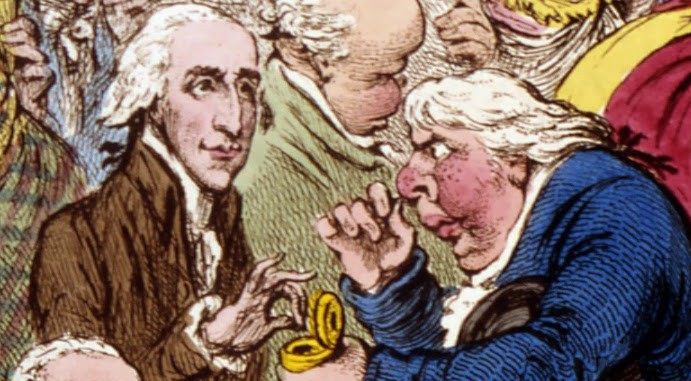 One of the perks of writing a novel set in the 18th century is that tobacconists around the world will send you free boxes of snuff. Just because I’m working exclusively in quill and ink, everyone assumes I indulge in the Age of Enlightenment craze for snorting ground-up tobacco. Maybe my name got on a list when I ordered the powdered wig (it’s being made from my old beard, which I of course saved).
I can claim a legitimate interest in snuff because the narrator of my stories, Jonathan Plummer, is a peddler. He sells tins of the stuff, along with needles, scissors, cures for the clap, poems and sermons and news accounts from his own pen, and — out of the depths of his seemingly bottomless basket — certain materials of interest to the discerning adult reader. Snuff was omnipresent in old Newburyport. It was even produced locally: a snuff mill in Byfield, the maker of Pearson’s Red Top Snuff, operated from Colonial times until 1990.
Snuff has a place in personal history as well. When I was a small boy in England, Nanny, my fun-loving paternal grandmother who sang in pubs, would send me around to the newsagent’s shop for a tin of her favorite snuff, which she would occasionally share with me. I don’t remember a nicotine buzz or any particular flavor (even though the powdered tobacco is often mixed with menthol, aniseed, eucalyptus, or various fruits and herbs), just the immediate urge to sneeze. I was told that sneezing was the whole point. And if Nanny said it, I believed it.
So now I have all these snuffs arriving. The first package, from the Swedish company Gotland’s, contained several tins of a special autumn blend known as Höstsnus. It’s a sweet, fruity snuff that reminds me of apples and blackberries. Höstsnus is manufactured on a seasonal schedule that commences in Week 37 (early September) and ends on October 30. You can bet we’ll be handing these out to trick-or-treaters.
An English mixture that intrigued me is Hedges L260 (Mr. Hedges evidently had a life before he met Mr. Benson). “The menthol blast is borderline insane, but incredibly refreshing,” wrote one reviewer. Another customer commended it for its “nice pinchability.” I just had to try some. A pinch every morning turned into a pinch twice a day, and now I dip into the Hedges L260 about once every twenty seconds. It’s that refreshing.
 Wilsons of Sharrow sent me a tin of its own minty snuff, a fine white tobacco-free powder you probably don’t want to pack in your airline luggage.
The most interesting item is a canister of something called Angelick Snuff. It appeared in my mailbox one morning, apparently hand delivered, with no hint as to its origin. The purple tin was slightly rusty, its print faded almost to illegibility, but the powder inside smelled heavenly, like lilacs and mother’s milk. When I Googled “Angelick Snuff,” I could find no manufacturer producing it, no vendor distributing it. There was only one reference at all, a newspaper advertisement from the 1700s. “Angelick Snuff,” the ad read —
[t]he most Noble Composition in the World, instantly removing all Manner of Disorder of the Head and Brain, easing the most excruciating Pain in a Moment; taking away all Swimming or Giddiness, proceeding from Vapours, or any other Cause; also Drowsiness, Sleepiness, all other Lethargick Effects; perfectly curing Deafness to Admiration, and all Humours or Soreness in the Eyes, wonderfully strengthening them when weak.
As I read these miraculous claims, I sensed the faint beginnings of a headache. I suffered from several other brain disorders as well — drowsiness, lethargy, and possibly deafness to admiration (I couldn’t be sure; I only knew I hadn’t heard any admiration in a while). What the heck, why not, I thought, as I pried the lid off the Angelick Snuff. I sprinkled a pinch of lavender-tinted powder on the back of my left hand and sniffed hard.
The walls of my study darkened into a roiling ocean. Saltwater blasted my face, and I leaned into a tremendous gale. I was the helmsman of a barkentine — which I somehow knew, without having to consult Wikipedia, was a sailing vessel with a square-rigged foremast and fore-and-aft rigged main, mizzen, and any other masts — and I was guiding her through an Atlantic storm. “Damn ye winds!” I shouted into the heavens. “Ye’ll not defeat me though ye blow and blow! Howl on, winds! Howl on!”
A minute later the winds died down and I was safe and dry in my study again. The headache was gone.

11 Friday Sep 2015
Posted in Tools of the trade
Tags
Today I had to decide whether a dowager in 1801 would have been more likely to “draw near” or “draw nigh.” It was easy. I mean, really easy. A few years ago, when it was merely somewhat easy, I would have been forced to rely on the little voice inside me that whispered, “Come on, bonehead, only trashy romance novels have characters drawing nigh, usually as they unfrock their comely bosoms.” But today I found my answer by heading straight to Google Ngram Viewer.
Do you ever use this remarkable language tool? I generally get blank stares when I mention it to people. But it’s well worth experimenting with, even if you’re not a writer.
Ngram Viewer is a byproduct of Google’s mass absorption of the world’s published works, more or less from Gutenberg to the present. Billions of words and phrases from millions of books now reside in Google’s chronological database.
An ngram, which sounds like something out of Scientology, is a unit of language — where n is the number of words in the phrase you want to study. Type in your word or phrase, choose the language database you want to search (your options include British, American, and other flavors of English), and specify the time span you’re interested in. Google then looks at all phrases of similar length in all books and journals within your chosen period, and calculates the percentage of phrases that match yours. This is usually a tiny fraction of 1 percent, many zeroes past the decimal point and not illuminating in itself (unless the number happens to be straight zeroes — that tells you a lot). But when many such percentages are graphed over time, as happens in Ngram Viewer, you get a userful snapshot of the term’s frequency in print as it went in and out of fashion.
Ngram Viewer would have helped the Downton Abbey people avoid some verbal gaffes — like “get shafted,” a phrase we are to believe Thomas the footman would have uttered in 1918. Computer says: No. Not before the 1960s.

You can trace several terms at once, as I did with “draw near” and “draw nigh,” to compare their fortunes over time. In publications from 1801, “draw near” was the clear favorite. Just as I suspected.

But one question still nagged me: Did I really want to use either of those phrases? They sounded so . . . prissy. I enlisted another cool Ngram Viewer feature: beneath the graph were links to the original publications, arranged by year, showing the context in which each phrase was used. Both terms, including the more popular “draw near,” were most common in fusty devotional texts: A Selection of Hymns from the Best Authors (1796), The Whole Works of the Late Rev. Mr. Ebenezer Erskine (1798), The Scotch Minister’s Assistant (1802). The little voice was right: “draw near” would have had an inch of dust on it even in 1801.
Would you like to know what my dowager did instead of draw nigh or near? She “trotted up the garden path,” of course.
07 Monday Sep 2015
Posted in Quotations, Timothy Dexter
When man is so week he wont doue for a Lawyer, make a preast of him, for week things to go with week things, the blind to Lead the blind.
—Timothy Dexter
07 Monday Sep 2015
Posted in Items of questionable veracity
To ensure that His Effing Nibs (the book) contains only 100-percent authentic powdered-wig-style prose, I am writing the entirety of the first draft with a quill pen. I should say quill pens, as each nib lasts only a page or two under my clumsy hand (I’m told my mileage will improve as I develop a lighter touch and a better command of the 18th-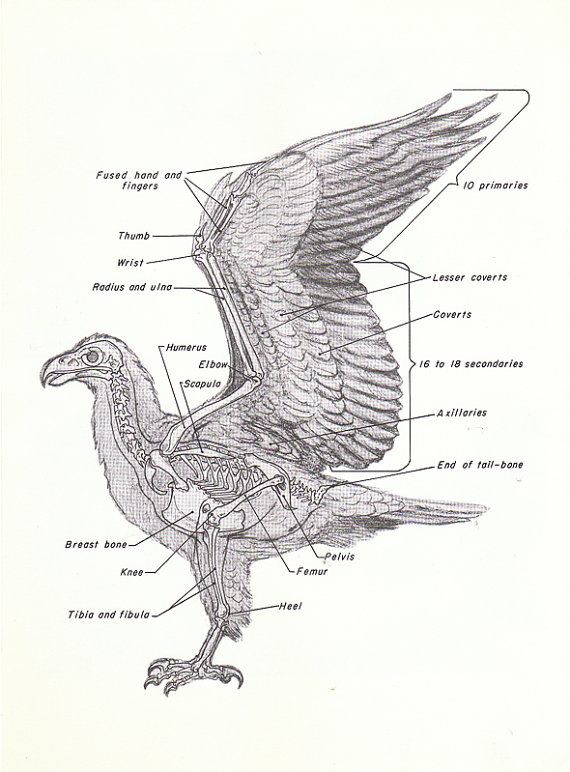 century flourishes). For now, I require a steady source of plumage. And the best plumage for writing stories that take place in the Revolutionary and Federalist eras is of course that of the American bald eagle, the national bird. Luckily, there is an eagle sanctuary not a mile from my house. One has only to climb the 150-foot pines on which the birds build their nests, or aeries, to find a lifetime supply of free writing instruments (and to think I used to have to raid the supply closet at Tufts Magazine for that purpose!).
A word to the wise: wear leather gloves, the thicker the better, and make sure the eagle is asleep before setting to work. The second and third primary flight feathers of the left wing are the ones you want (assuming you are right-handed). It is best to wait several days before approaching the same bird again.
06 Sunday Sep 2015
Posted in Dexter's image
Timothy Dexter’s reputation as a vainglorious self-promoter outlived him by many decades. In 1863, almost sixty years after his death, he was mentioned in an essay called “Life Without Principle,” published in The Atlantic Monthly. The essayist was none other than Henry David Thoreau — who I think should have known better than to believe what people said about a fellow nonconformist. (He licks his own reputational wounds in the same essay: “If a man walk in the woods for love of them half of each day, he is in danger of being regarded as a loafer.”)
Anyway, the passage I’m referring to is part of Thoreau’s attempt to explain the difference between meaningful and meaningless work. He writes that he watched a neighbor struggle all morning to drive a team of oxen hauling a slab of stone across a field. “Honest, manly toil,” he thinks as the sweat drips from the man’s brow. But he has second thoughts when he discovers the purpose of the stone.
The day went by, and at evening I passed the yard of another neighbor, who keeps many servants, and spends much money foolishly, while he adds nothing to the common stock, and there I saw the stone of the morning lying beside a whimsical structure intended to adorn this Lord Timothy Dexter’s premises, and the dignity forthwith departed from the teamster’s labor, in my eyes.
To Henry David, and to his Atlantic readers, Dexter is simply a type, a name for an extravagant buffoon. But I have a feeling that if H.D. had ever come to old Newburyport and shared a pipe with Dexter in the Temple of Reason — the glass-enclosed tomb Dexter erected in his back yard as a place to sit and think about life and mortality — and if he had read Dexter’s book of homespun wisdom, A Pickle for the Knowing Ones, in a charitable enough frame of mind, he might have glimpsed a little of himself. Species recognition, we call it today.
Other than that, I have no complaints about “Life Without Principle.” Thoreau is refreshingly unrealistic — firing off zingers like “I do not need the police of meaningless labor to regulate me,” and “There is no more fatal blunderer than he who consumes the greater part of his life getting his living.” Do not read the rest of the essay, though. It will make you quit your job.
04 Friday Sep 2015
Posted in Book progress, Timothy Dexter
The quote with which I kicked off this blog tells you all you need to know about why I chose to make Timothy Dexter the lead character of my planned stories and novels. It’s the opener to his little book, A Pickle for the Knowing Ones: Or, Plain Truths in a Homespun Dress, published in 1802, when Dexter was fifty-five. There is so much to explore in those few words: “Ime the first Lord in the younited States of A mericary, Now of Newburyport. It is the voise of the people and I cant Help it and so Let it goue.”
The first thing you notice is the inventive spelling. Some of it can be explained by a lack of schooling and a paucity of dictionaries. But a glorious mash-up like “the younited States of A mericary” — surely that belongs in a category by itself. Was the guy dyslexic? Did he have other “learning issues?” Did this hinder his quest for social acceptance? And what should we make of the missing punctuation marks (I threw a few in for readability)? Were they the spines on the pickle that Dexter was metaphorically ramming up his neighbors’ backsides? Answering those questions is a book in itself.
But dig deeper and the quote opens up a universe of paradox and pain. A lord. In the United States. The fledgling democracy has no use for a hereditary peerage, so Dexter’s title is bestowed by “the voise of the people.” He’s the first lord to be democratically elected! Not only that, but he “cant Help it.” The title has been foisted upon him by those who (I think) resent his rise from poor tradesman to wealthy merchant. The big house surrounded by statuary, the fancy carriage drawn by cream-colored horses, the expensive clothes — this was way too much upward mobility for a humble leather dresser.
The standard lore about Dexter says he “proclaimed” himself a lord, and did so out of vanity. But I say, poppycock. The Dexter in my stories — and I think the real Dexter — is a man of talent and imagination who goes along with the mock title of “lord” to show that he can take a joke. Just like Obama embracing the once-disparaging term “Obamacare,” or Volkswagen owning the term “bug,” or Target owning the “Tarzhay” label, Dexter “can’t help it, and so lets it go.” A little further on, he forgives the haters(and I’m transliterating): “No bones broken. All is well, all in love.”
As a writer, I am drawn to all of these tensions — between the man and his time, the man and his town, the man and his mythology. And of course the continuing struggle between the man and his native language. Somebody can have a hell of a lot of fun with this, and it might as well be me.
04 Friday Sep 2015
Posted in Quotations, Timothy Dexter
Ime the first Lord in the younited States of A mericary, Now of Newburyport. It is the voise of the people and I cant Help it and so Let it goue.
–Timothy Dexter
 His Effing Nibs